


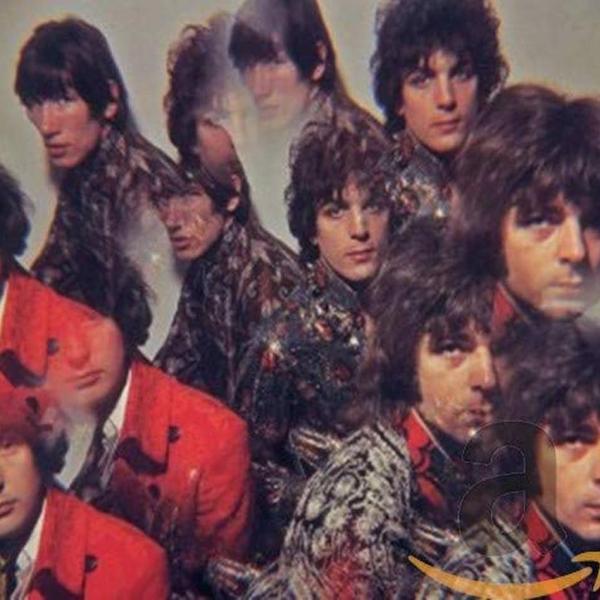
The History of Pink Floyd: The Piper at the Gates of Dawn
Episode 3
Episode date - May 14, 2026

We are going to do something a bit different with this Pink Floyd series, in comparison to all of the other ‘How Music Changed’ series that we’ve thus far completed. For our Wednesday Top 500 of the Top 40 and Alternative Top 500 series, we have already covered a significant number of Pink Floyd albums for that series. Since we already covered them, it only makes sense to drop them into this “History” series, when applicable. So, here is our first installment of adding a Wednesday show to our Friday series, a show that covers the entirety of Pink Floyd’s debut album, “Piper at the Gates of Dawn.” These shows will NOT be re-aired in our Friday series, but will be ‘special’ additions for our ‘How Music Changed’ website series only.
If your introduction to Pink Floyd (and the extent of your knowledge of the group) extends from ‘Dark Side of the Moon’ to ‘The Wall,’ then you are in for one heck of a surprise. If you were thoroughly indoctrinated into the latter-day, self-absorbed, megalomaniacal visions of Roger Waters, you will likely be stupefied by the band’s earlier work. Granted, the Syd Barrett era did not last long – one album, actually, although he was a ghostlike presence on ‘Saucerful of Secrets’, the group’s second release. It is incredible, then, to consider that the entire legacy of Syd Barrett (pre-meltdown) is based solely on a handful of singles and this, Pink Floyd’s debut LP.
In such a short amount of time, Syd Barrett managed to become the single greatest proponent for taking acid. Then, just as fast, he became the single most important proponent for NOT taking acid. This album captures Barrett just before the meltdown, at the height of his playful acid vision fantasies. Better than anyone before or since, Barrett brilliantly combined both sides of the psychedelic coin – the fear and mystery of the unknown on one side, fascination and childlike whimsy on the other.
Word on the street was that the band did not get a particularly lucrative deal from EMI upon signing, but the advantages were enormous. Primarily, the label was completely confounded by their new wards, so they imposed no artistic control whatsoever. Even better, it meant that Pink Floyd could record at Abbey Road Studios, a place that knew a thing or two about making great sounding records. Sessions for “Piper at the Gates of Dawn” were interwoven with Beatles sessions for “Sgt. Pepper’s Lonely Hearts Club Band.”
You should know that the American and British versions of this album each delete one absolutely integral track from the finished product. “See Emily Play” may qualify as the best acid-inspired 45-RPM single of all time (followed closely by Barrett’s other non-LP masterpiece, “Arnold Layne”), but the English music business was averse to including singles on albums, so it is sorely missed on the British release. In America, they made room for “See Emily Play”, but they did so by removing “Bike”, the most amusing masterpiece of Barrett’s career. It’s a tough choice, but easily resolved in this digital age.
Featured tracks:
Astronomy Domine
Lucifer Sam
Matilda Mother
Flaming
Pow R. Toc H.
Take Up Thy Stethoscope and Walk
Interstellar Overdrive
The Gnome
Chapter 24
The Scarecrow
Bike
Channel 157 - The History of Pink Floyd

- 1 of 2
- ››
