

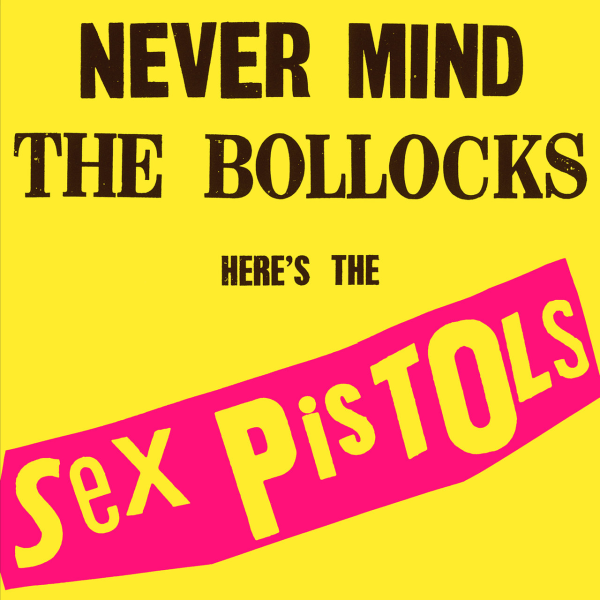
The Sex Pistols: Never Mind The Bollocks Here's The Sex Pistols
Album #238 - October 1977
Episode date - October 7, 2026

If I had to pick just one album to represent the fundamental intent of this collection of essays, “Never Mind the Bollocks” would be it. Never before had a band proven itself to be so immediately controversial and disruptive.
In 1977, the Sex Pistols represented the Maginot Line of music. You stood on one side or the other, and the resistance movement was intense. Anybody raised on folk, pop or blues-based music (which means virtually everyone over the age of eighteen) were horrified by the crude behavior and undisciplined musicianship that the band represented. As much as the Sex Pistols themselves would likely deny any overt intention beyond anarchy, the truth is that their very existence represented a social change of gigantic proportion, and a seismic realignment of pop music trends.
The Sex Pistols attracted so much bile and hatred because they spewed it themselves at anything representing the ‘old guard’. Thus, the queen was fair game, as were hippies, the music industry, and anything that represented ‘the establishment’. Anybody who lived through it will recall that mid-seventies society was a total mess. As the hippie dream crumbled into a self-serving joke, city infrastructure was falling apart, crime was rampant, unemployment was high, inflation was spinning out of control, and an energy crisis provoked a sense of helplessness.
In England, ‘punk’ was a reactionary movement, and the Sex Pistols became the focal point of a scene representing a radical departure in both cultural politics and fashion. Johnny Rotten’s sneering vocal on “Anarchy in the UK” was the perfect foil for a new political agenda, with music as the catalyst, wielded as if it were a weapon. By the time the band released its second single, “God Save the Queen,” it had already been dropped by EMI and A&M, corporate labels that couldn’t handle the heat created by their affiliation. The song itself was banned literally everywhere – the week of its release, England’s music charts left a blank spot at the #1 position, as a means of protest. What else could say more about the hatred and backlash that this music inspired? All this hubbub delayed the release of an album – on Virgin, the band’s third label in six months – which retailers handled as if it came dusted with anthrax. Rotten, meanwhile, escalated the furor with brilliant bon mots. Asked about the fury that encompassed their every move, he responded, “I don’t understand it. We’re only trying to destroy everything.”
America, meanwhile, ignored the band as if they were a British virus that needed to be quarantined. We never heard any of their music on the radio, but the nightly news covered their tour of America as if it were an invasion on American decency. Sid Vicious in particular was singled out for his blatant lack of musical ability and for encouraging violence. The overall effect would have been cartoon-like, if the press hadn’t been so self-serious in their righteous indignation. By the time the tour ended, so did the band. Despite the notoriety, “Never Mind the Bollocks” climbed no higher than #106 on the American charts, quite likely the result of manipulation to prevent the band from gaining a significant foothold, although radio’s blatant fear of/disgust for the band certainly played a significant role.
The aftermath of the breakup was disastrous and tragic, but the impact of the music could not be diluted. Everything that came after “Never Mind the Bollocks” had to acknowledge its impact. The musical hierarchy that predated the band had been deconstructed. They did not destroy society, but they certainly spray-painted their logo on its now cracked edifice. To this day, a song like “Pretty Vacant” can cause a room to erupt, and it can just as easily instigate discomfort. Anything as explosively divisive is unlikely to ever occur again.
Featured Tracks:
Holidays in the Sun
Bodies
No Feelings
Liar
Problems
God Save the Queen
Seventeen
Anarchy in the U.K.
Submission
Pretty Vacant
New York
E.M.I.
October 1977 - Billboard Charted #106
Related Shows


